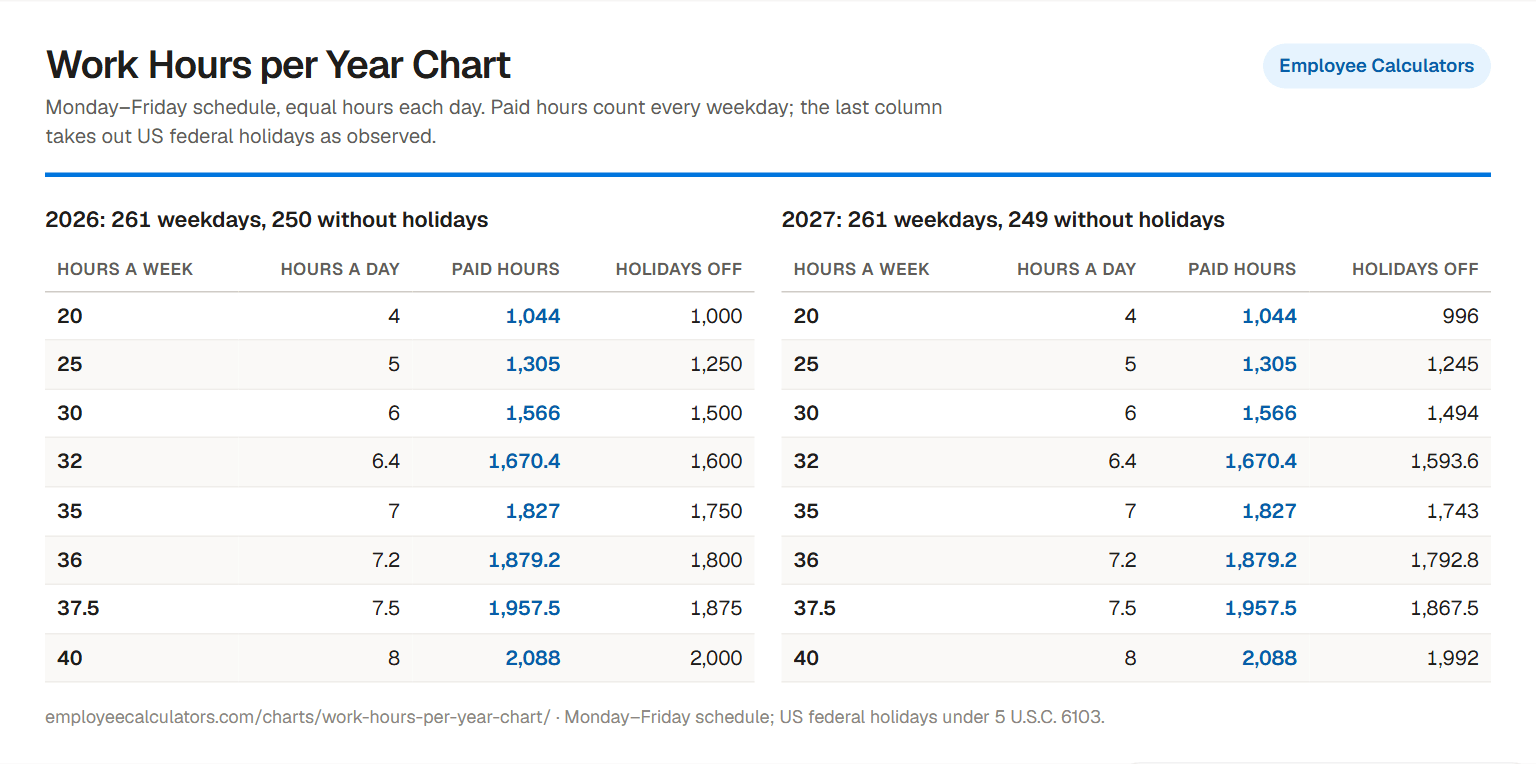
How to read the chart
A 40-hour week in 2026 has 2,088 paid hours (261 weekdays × 8 hours). If you are off on the federal holidays, you work 2,000 hours. Paid holidays still count toward a salary, so the paid-hours column is the one to use when converting pay.
Why it is not always 2,080
2,080 hours is 52 weeks × 40 hours, which is 364 days. A calendar year has 365 or 366 days, so some years have 261 or 262 weekdays instead of 260, which adds 8 or 16 hours. Hourly workers paid for every weekday notice it as an extra day of pay; salaried pay does not change. To subtract your own PTO or use a different workweek, use the work hours per year calculator.
Related tools and guides
For any value that is not on the chart, use the work hours per year calculator. The guide explains the math step by step.
How this chart was made. Every value is computed by the same tested formulas as our calculators; nothing is typed by hand. Read our methodology and disclaimer.
Last updated: